
Real Customer Service Rep
Serving San Francisco, Oakland, San Jose and the Santa Rosa Area
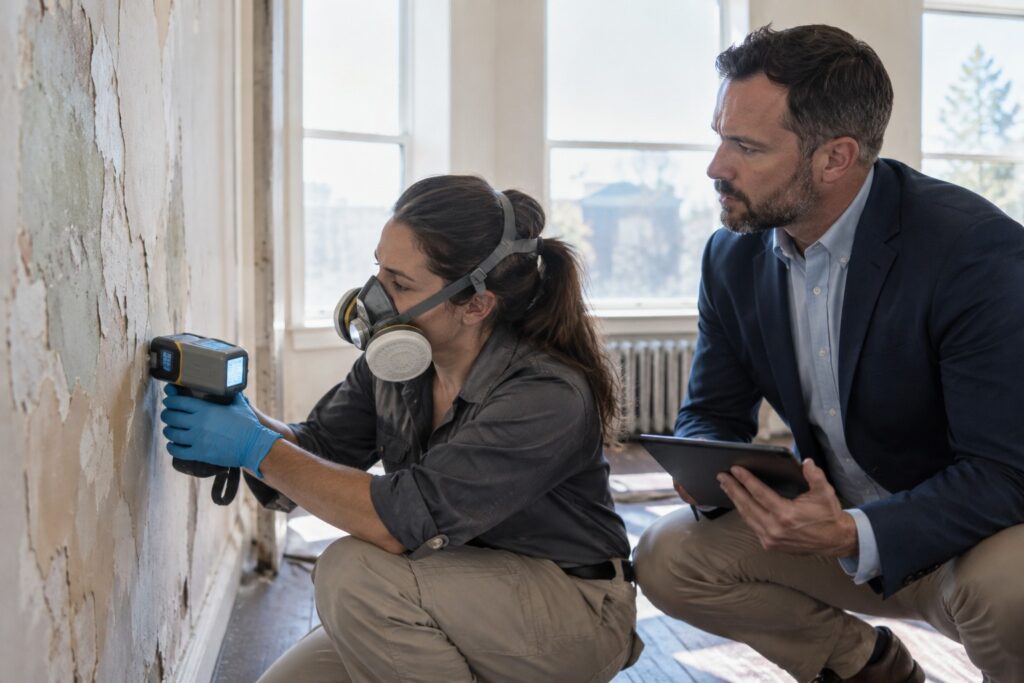
Real estate attorneys across the Bay Area stay busy on both sides of the fence, and tenant protections here are some of the strongest in the country. At least once a month, a property manager asks us to open a wall that has never been tested for lead or asbestos — or we arrive on a jobsite where a handyman or unlicensed contractor has already cut it open.
We did not write these rules, and we did not write the medical science behind them, but we follow them. They exist to protect employees, tenants, visitors, and the property itself — and they exist because breathing in asbestos fibers or ingesting lead dust is a real, documented danger, not a bureaucratic inconvenience.
A leaking pipe, damaged wall, flooring replacement, tenant improvement, or emergency water and fire cleanup can look routine. In an older California building, though, that same work can disturb lead-containing paint or asbestos-containing material — and that changes the job. Before anyone cuts, drills, sands, scrapes, or demolishes suspect material, determine whether hazardous materials may be present and put the right work plan in place first.
Dust and debris from disturbed lead or asbestos can travel into occupied areas, settle on personal property, enter ventilation pathways, and expose tenants, visitors, vendors, and maintenance staff. A poorly managed project can also create regulatory violations, delayed insurance claims, stop-work orders, expensive corrective work, and allegations that the property owner failed to act responsibly.
Testing after demolition has already started is almost always more expensive and disruptive than testing during planning. Once suspect material has been disturbed, the manager may have to stop work, restrict access, investigate possible contamination, notify additional parties, and expand the cleanup.
Get testing done before tenant improvements; flooring, ceiling, roofing, or wall-system replacement; plumbing and electrical access; HVAC work; window and door replacement; fire, water, and mold remediation; unit turns involving painted or coated surfaces; demolition or partial demolition; or any work that generates dust, chips, debris, or damaged insulation. Federal air-quality rules also impose inspection, work-practice, and notification requirements for certain asbestos-related renovation and demolition activities, depending on the structure, activity, and amount of regulated material.
If you have emergency water damage, you can dry hazardous materials without disturbing them — but you cannot cut, drill, or tear them out. Those actions release hazardous materials into the airstream. Do not let a tight schedule become the reason testing was skipped.
Testing is only useful when the person collecting samples, the laboratory, and the written report are appropriate for the purpose. A mail-in test kit is not a substitute for a qualified inspection. For lead hazard evaluations in California, use a properly certified lead professional when certification is required — California identifies inspector/assessors as the professionals who conduct lead inspections and risk assessments, including XRF testing and environmental sampling.
Ask the consultant to identify the survey’s limitations clearly. A survey limited to one room, one material, or one immediate repair should not be treated as proof that the entire property is free of lead or asbestos. When a restoration company is involved, have the consultant send the report directly to them so they can advise you and estimate the job accurately.
Even a well-planned project can uncover concealed materials. Contracts and work orders should require workers to stop and notify management when they encounter unidentified insulation, wrap, texture, adhesive, or flooring; additional painted layers or concealed coatings; materials outside the original survey area; unexpected dust, debris, or damaged suspect material; a change in demolition methods or project scope; or evidence that containment has failed.
Pause the work until the consultant confirms how to proceed. A short, controlled delay is almost always easier to defend than allowing work to continue after a warning sign appears.
Fire & Water Damage Recovery does not perform asbestos abatement work. If suspect material turns up mid-restoration, we stop, protect the area, and bring in a qualified environmental consultant before any further disturbance — rather than pushing ahead to meet a deadline.
Hazardous material removal planning must account for how people and air move through the property. Before work begins: define the regulated or controlled area; establish who may enter and how access will be logged; evaluate HVAC shutdowns, isolation, or protection; plan worker, equipment, and waste routes; protect adjacent occupied spaces and personal property; coordinate work hours with building operations; post appropriate signs and notices; provide alternative access or temporary relocation when necessary; establish daily inspection and housekeeping requirements; and decide what clearance testing or final verification will be required before reoccupancy.
For pre-1978 residential property, separate federal and California disclosure and notification duties may also apply to lead-based paint information. Maintain the required records and provide the required materials to tenants and purchasers.
Good intentions are difficult to prove without records. Build a project file that tells the complete story from the first report through final clearance: the original complaint, leak, damage, or project request; dates and times of management response; before-work photographs and building-history documents; consultant qualifications and insurance; sampling locations, chain-of-custody records, and laboratory results; the written scope, protocol, and bid documents; contractor licenses, certifications, and insurance; tenant, employee, vendor, and owner communications; daily logs, access logs, and containment inspections; waste manifests and disposal records; change orders and stop-work decisions; clearance or final verification results; completion photographs; and written authorization to reoccupy or return the area to service.
Preserve earlier reports even when new testing is performed. California’s asbestos standard includes owner record-retention and information-transfer duties, and those records may remain important during later maintenance, sale, renovation, or management transitions.
The property manager’s responsibility is not merely to get the project finished. It is to help the owner make informed decisions and create a defensible record of responsible management. A disciplined process helps protect the owner by reducing the likelihood of preventable exposure, demonstrating that recognized hazards were taken seriously, showing that qualified professionals were retained, and preventing unqualified contractors from controlling how the work is done.
Lead and asbestos problems become harder to manage after materials have been disturbed and people are asking why no one tested first. Property and facility managers can change that outcome. Treat hazardous-material review as a normal part of project planning, not an emergency reaction: test before disturbance, use qualified independent professionals, control the building as well as the work area, communicate accurately, and document every important decision.
Those practices protect employees and tenants. They also protect the owner’s building, finances, reputation, and ability to demonstrate responsible management.
Fire & Water Damage Recovery does not perform asbestos work. We can provide referrals to qualified environmental testing firms and asbestos contractors, review reports with you, and help you plan the restoration response. This article provides general educational information only, not legal, medical, or regulatory advice.


F&WDR is a family-owned and operated local company with four locations to insure a quicker response and better service to San Francisco, Oakland, San Jose, and Santa Rosa.

