
Real Customer Service Rep
Serving San Francisco, Oakland, San Jose and the Santa Rosa Area
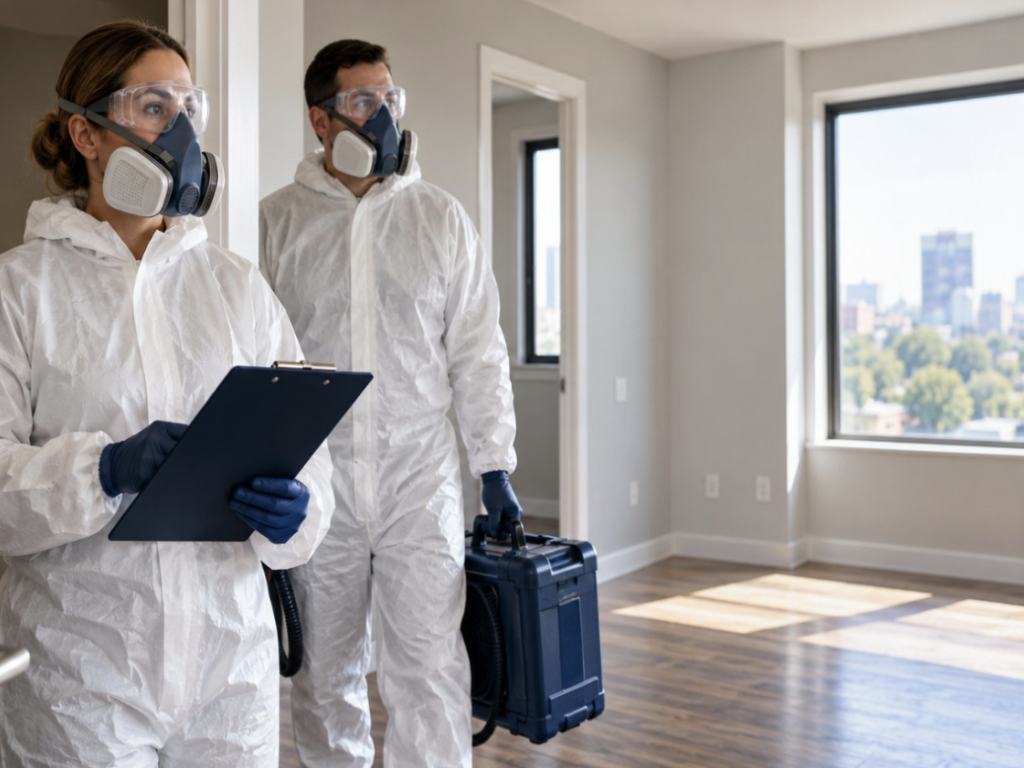
Probably the most difficult and unpleasant part of a property manager’s job is dealing with a tenant who has passed away. From someone who dies peacefully in their sleep to a pair of tenants going at it with knives, the property manager is dealing with a lot. Not only is sanitizing a biohazard situation challenging technically, it poses significant health risks to the cleaning staff and the results greatly impact the future residents. There are also emotional challenges to facing this type of clean up. Most janitorial firms are not prepared or able to properly staff and perform this work. We have a select few lead technicians who have extensive training from industry authorities in this field, have achieved certifications and are experienced in facing the demands of a trauma cleanup. We have stories. You have stories. Let’s forgo them and go over the basics of what needs to happen in this situation.
First Take Care of the Emergency
If you discover someone who may have died, call 911 and follow the dispatcher's instructions. Do not
assume that the person is beyond help. If violence or another danger may still be present, stay out and wait for emergency responders.
Once responders arrive, let them control the scene. Do not move belongings, wipe surfaces, or begin
cleanup until the investigating agency or coroner has released the area. Removal of the person does
not necessarily mean the scene has been released for cleaning.
Keep residents, employees, visitors, and pets away from affected areas. If contamination extends into a
hallway, stairwell, or elevator, tell responders and the cleanup contractor so those areas are included in the assessment.
Inform officials of the situation and ask for guidance on managing the scene and when cleaning crews
may access the area. Notify the family and coordinate decisions about the deceased’s contents and
belongings with the person legally authorized to act.
Determine What Actually Needs Cleaning
A death does not automatically mean that an entire unit needs biohazard remediation. Someone who passes away and is discovered promptly may leave little or no contamination. Routine cleaning may be appropriate after the scene is released and the conditions are assessed.
An unattended death can be very different. Decomposition fluids may penetrate a mattress, carpet,
padding, flooring seams, or the subfloor. The visible stain may be only part of the affected area. The
contractor should assess the extent of contamination and explain what can be cleaned and what needs removal.
The goal is to address the actual contamination without overlooking hidden damage or removing
materials unnecessarily.
Be aware that certain materials may not be able to be cleaned and salvaged.
Significant Blood Requires Attention Even When No One Dies
A serious fall, medical emergency, accident, or assault can leave substantial blood behind even when the injured person survives. The cleanup decision depends on the contamination and exposure risk, not whether there was a death.
Treat human blood as potentially infectious. You cannot determine whether it presents a bloodborne pathogen risk by looking at it, knowing the person, or seeing that it has dried.
Restrict access and arrange a professional assessment when blood has pooled, soaked into porous materials, spread through multiple areas, or contaminated belongings. Broken glass, needles, and other sharps add hazards. Do not ask a resident or an untrained maintenance employee to start wiping it up.
There is no practical one size-fits-all rule based on the size of a stain. A small, contained spot on a cleanable hard surface is different from blood that has penetrated carpet or entered flooring joints. Your written workplace procedures and a qualified assessment should guide the response.
If the injured tenant is returning, coordinate safe access and any temporary arrangements. An injury does not end the tenancy, and contaminated belongings do not become the manager’s property.
Protect Your Maintenance and Housekeeping Employees
A pair of gloves and a bottle of cleaner are not a complete employee protection program.
Where employees have reasonably anticipated occupational exposure to blood or other potentially infectious materials, California’s bloodborne pathogens standard requires protections that include an exposure control plan, training, appropriate protective equipment, and applicable hepatitis B vaccination and post-exposure procedures.
Do not improvise by assigning substantial blood or decomposition cleanup to whoever happens to be available. Confirm that the people doing the work have the training, equipment, procedures, and willingness to do it safely.
If an employee experiences a needlestick, a splash to the eyes or mouth, or blood contact with broken skin, follow your exposure procedure immediately. Wash affected skin or flush exposed mucous membranes, report the incident, and obtain prompt medical evaluation. Do not wait for symptoms.
Choose a Qualified Cleanup Contractor
For work that falls within California’s trauma scene cleanup requirements, verify that the company holds current registration with the California Department of Public Health as a Trauma Scene Waste Management Practitioner. Registration is a regulatory requirement for applicable work, not a guarantee of workmanship.
Ask the contractor to explain:
Get a written scope and authorization. If removal will disturb building materials that may contain lead or asbestos, resolve the testing and handling requirements before demolition.
Understand the Difference Between Cleaning and Covering Up
Cleaning removes contamination. Disinfection addresses microorganisms on suitable surfaces after the required cleaning. Products must be appropriate for the intended use and applied according to their labels, including the required wet contact time.
Spraying disinfectant over visible blood, shampooing a contaminated carpet, painting over a stain, or masking an odor does not establish that the underlying contamination has been addressed.
Heavily contaminated porous materials may need removal because the contamination cannot be adequately reached and cleaned. Other materials may be recoverable. Ask for the reason behind each removal recommendation.
Odor treatment may be part of the work, but the source needs to be addressed. A pleasant smell is not proof of successful cleanup, and a lingering odor deserves further investigation.
Handle Family Access and Belongings Carefully
Families may urgently want photographs, documents, jewelry, or other keepsakes. Respond with compassion, while explaining any scene restrictions and contamination hazards.
Confirm who has legal authority to access the unit, receive belongings, or authorize their disposal. Being a relative or an emergency contact does not automatically establish authority over the estate. Coordinate with the estate representative and your legal adviser; the county Public Administrator may be a resource when no representative is known.
Do not treat everything in the unit as abandoned or disposable because the tenant has died. Keep an inventory and document decisions about contaminated items. Arrange retrieval of salvageable belongings through a safe process after the scene is released.
The death of one occupant also does not automatically terminate the rights of surviving tenants. Get legal guidance on possession, access, lease obligations, belongings, and the security deposit before proceeding.
Document the Work and Contact the Insurer
Notify the owner and the appropriate insurer promptly. Ask about coverage, documentation, and any inspection requirements. Coverage depends on the policy and circumstances; do not promise the owner that cleanup, repairs, or lost rent will be covered.
Maintain a file containing scene-release information, authorizations, the contractor’s scope, relevant photographs, disposal records where applicable, invoices, and completion documentation.
Keep photographs and personal information confidential. Limit access to people who need them for the work, claim, or legal process. Other residents generally need practical information about access and safety, not details about the deceased or the incident.
Return the Unit to Use Only After the Work is Complete
Have the cleanup contractor document the areas treated, materials removed, and any limitations or additional work needed. Ask how completion was assessed. A general statement that the unit was “sanitized” is less useful than a clear account of what was done.
Arrange any remaining repairs and confirm that the unit is suitable for occupancy before returning it to use. Cleanup documentation does not replace required repairs or any applicable agency requirements.
Fire & Water Damage Recovery handles mitigation rather than reconstruction. Our focus is assessing the affected area, addressing contamination, and helping you understand what needs to happen next. If rebuilding is necessary, coordinate that work separately.
Pro Tip: Add a qualified biohazard cleanup provider to your emergency vendor list before you need one. Establish who can authorize work, who communicates with the owner and insurer, and how your team will secure an affected area. A written plan gives your staff a clear next step during a difficult situation.
You do not have to become a biohazard cleanup expert to manage the situation well. Protect people, wait for the scene to be released, bring in qualified help, respect the tenant’s belongings and surviving occupants, and document the work. Whether the incident involves a death or significant blood after an injury, the goal is the same: returning the property to safe occupancy.


F&WDR is a family-owned and operated local company with four locations to insure a quicker response and better service to San Francisco, Oakland, San Jose, and Santa Rosa.

